Grams to Ounces Converter
Uncategorized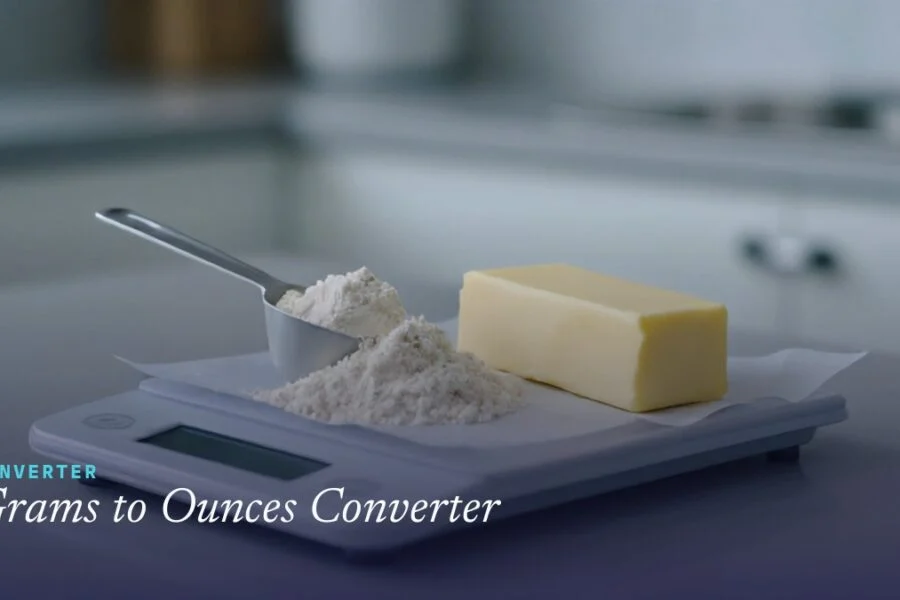
How to Use This Tool
1 ounce = 28.35 grams. This is the weight ounce, used for food, packages, and body weight. It’s not the fluid ounce used for liquid volume — that’s a completely different kind of measurement.
Formula
ounces = grams ÷ 28.35
grams = ounces × 28.35
Worked example: 24 oz × 28.35 = 680.4 g.
Reverse example: 500 g ÷ 28.35 = 17.64 oz.
Reference table
| Grams | Ounces |
|---|---|
| 25 g | 0.88 oz |
| 40 g | 1.41 oz |
| 50 g | 1.76 oz |
| 60 g | 2.12 oz |
| 75 g | 2.65 oz |
| 85 g | 3.00 oz |
| 100 g | 3.53 oz |
| 112 g | 3.95 oz |
| 113 g | 3.99 oz |
| 150 g | 5.29 oz |
| 200 g | 7.05 oz |
| 225 g | 7.94 oz |
| 238 g | 8.40 oz |
| 250 g | 8.82 oz |
| 300 g | 10.58 oz |
| 400 g | 14.11 oz |
| 450 g | 15.87 oz |
| 500 g | 17.64 oz |
| 600 g | 21.16 oz |
| 800 g | 28.22 oz |
| 1000 g (1 kg) | 35.27 oz |
Every value above uses the 28.35 g-per-ounce constant.
Ounces to grams
| Ounces | Grams |
|---|---|
| 1 oz | 28.35 g |
| 2 oz | 56.70 g |
| 3 oz | 85.05 g |
| 4 oz | 113.4 g |
| 4.5 oz | 127.6 g |
| 5 oz | 141.75 g |
| 6 oz | 170.1 g |
| 8 oz | 226.8 g |
| 10 oz | 283.5 g |
| 12 oz | 340.2 g |
| 16 oz (1 lb) | 453.6 g |
| 24 oz | 680.4 g |
| 32 oz | 907.2 g |
Multiply any ounce figure by 28.35 to get grams.
More worked examples, ounces to grams
The reverse direction gets searched just as often, especially for recipe ingredients sold by the ounce in the US.
- 1 oz to grams: 1 × 28.35 = 28.35 g.
- 4 oz to grams: 4 × 28.35 = 113.4 g. That’s the weight of a standard small chicken breast portion, or a quarter-pound of deli meat.
- 8 oz to grams: 8 × 28.35 = 226.8 g. Half a pound — a common butter or cream cheese package size in the US.
- 12 oz to grams: 12 × 28.35 = 340.2 g. A standard soda can’s contents by weight, or a common steak portion.
- 16 oz to grams: 16 × 28.35 = 453.6 g, exactly 1 pound.
- 1/4 oz to grams: 0.25 × 28.35 = 7.09 g. A common small-batch spice or supplement measurement.
- 1/8 oz to grams: 0.125 × 28.35 = 3.54 g.
The distinction that causes real mistakes: weight oz vs. fluid oz
This converter handles weight — how heavy something is. A fluid ounce measures volume instead, how much space a liquid takes up. They are not the same unit, despite sharing a name.
Weighing 8 fl oz of water comes out close to 8 weight-oz (about 227 g), since water sits near a standard reference density. But 8 fl oz of honey weighs more than 227 g in weight-oz, because honey is denser than water.
If a label just says “oz” without specifying, use context. A bag of chips or a steak is almost always weight ounces. A liquid poured into a measuring cup is fluid ounces.
Where grams-to-ounces conversions come up most
- Baking. Precision baking recipes, especially bread, are increasingly written in grams. Bread is sensitive to hydration ratios, and grams are more exact than “cups” of flour, which varies in weight depending on how tightly it’s packed. If your recipe is in grams and your scale reads ounces, convert each ingredient rather than eyeballing it.
- Protein and nutrition labels. US labels often list serving sizes in both grams and ounces — a 150 g chicken breast is 5.29 oz. Some international products sold in the US list only grams, so a quick conversion lets you compare against a US-style label.
- Shipping and postage. Small-package shipping rates are frequently tiered by ounce in the US postal system. A 100 g item is 3.53 oz — just over the common 3.5 oz first-tier cutoff on some services. That difference can change what a package costs to mail.
- Jewelry and precious metals. Gold and silver are typically priced per troy ounce (31.1 g). That’s a different unit from the standard avoirdupois ounce used above. The two “ounces” aren’t interchangeable, despite sharing a name — similar to the weight-vs-fluid-ounce mix-up.
Reading a kitchen scale correctly
Most digital kitchen scales default to grams or weight-ounces. Switching between the two is usually a single button press.
European recipes and precision baking are often written in grams. If your scale is set to ounces, switch the unit or convert first. Don’t eyeball grams against an ounce reading — the numbers aren’t close enough to approximate safely when baking ratios matter.
Frequently Asked Questions
How many grams are in 1 oz exactly?
28.3495 grams, usually rounded to 28.35 for everyday use.
Is 100 grams about 3.5 ounces?
Yes — 100 g is 3.53 oz, a commonly used rough benchmark. Many protein and nutrition labels use 100 g as their reference serving size.
Why is 1 oz not a round number in grams?
The ounce and gram come from different historical systems. They were never designed to align, so 28.3495 g is just where the two land once you convert precisely.
How many grams is 1/4 oz?
7.09 grams. A common measurement for a single spice serving or a small supplement dose.
Why do some grams-to-ounces answers round to 3 significant figures and others don’t?
It’s just a display choice. 250 g converts to 8.8185 oz exactly. Two decimals (8.82 oz) is standard for everyday use; a lab measurement might keep more.
Is 400 grams about 14 ounces?
Yes — 400 g is 14.11 oz, just over 14 ounces. Canned goods often show both units, and the numbers can look mismatched if you expect a cleaner ratio.
How many ounces is 112 grams?
3.95 oz — close to 4 oz, but not quite. If a recipe calls for “112g (about 4oz),” treat the gram figure as the precise one.
Related Articles

How Big Is an Acre? Real-World Size Comparisons in Feet
An acre covers 43,560 square feet. Shaped into a perfect square, that’s about 208.7 feet on each side — a little smaller than a football field. Numbers alone…

How Long Is X Seconds? 14 Real Durations You Can Picture
Seconds are the hardest unit of time to feel intuitively. They’re too short for most people to estimate accurately without counting, and easy to lose track of once…
How Long Is 20+ Feet? Real Object Comparisons
At 20 feet and beyond, you’re out of “hand and body” territory. You’re into “building and vehicle” territory instead. This is the scale where architects, contractors, and sports…
How Tall Is 37+ Inches? Real Object Comparisons
Past three feet, “inches” starts overlapping with height — a TV screen, a doorway, a person. That’s exactly why “how tall is 63 inches in human height” shows…