How Big Is an Acre? Real-World Size Comparisons in Feet
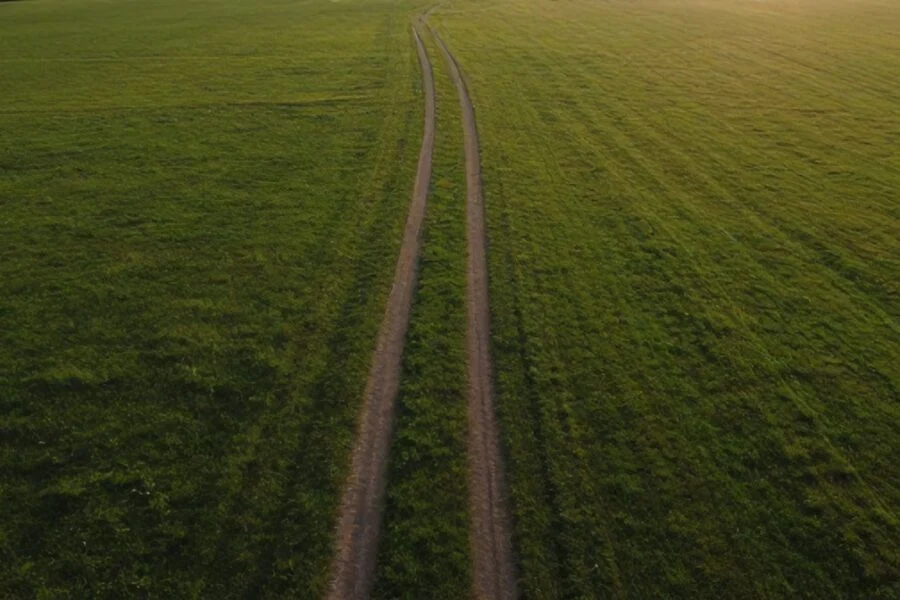
An acre covers 43,560 square feet. Shaped into a perfect square, that’s about 208.7 feet on each side — a little smaller than a football field.
Numbers alone don’t stick, though. Below are real, checkable comparisons that show what an acre of land actually looks like, plus where that odd 43,560 figure comes from.
Quick reference: acre conversions
| Measurement | Equivalent |
|---|---|
| 1 acre | 43,560 sq ft |
| 1 acre | 4,840 sq yd |
| 1 acre (as a square) | ~208.7 ft × 208.7 ft |
| 1 acre | 0.4047 hectares |
| 1 acre | 4,047 sq meters |
| 20 acres | 871,200 sq ft |
| 20 acres | 0.03125 sq mile |
How long is an acre in feet?
There’s no single length, since real parcels come in every shape. A long, narrow acre could run 800 feet on one side and just 54 feet on the other.
The square version is the easiest to picture. Each side runs 208.71 feet. Walk the full perimeter and you’d cover about 835 feet.
Acre vs. a football field
An American football field, goal line to goal line, measures 300 by 160 feet. That’s 48,000 square feet — about 1.1 acres.
Add both end zones and the full field grows to 360 by 160 feet, or 57,600 square feet. That’s 1.32 acres. So a football field, end zone to end zone, beats a single acre by close to a third.
Acre vs. a soccer pitch
FIFA’s recommended pitch size for international matches is 105 by 68 meters. That works out to 7,140 square meters, or roughly 76,850 square feet.

Divide by 43,560 and you get about 1.76 acres. A regulation soccer pitch runs noticeably bigger than an acre — more so than a football field does.
Acre vs. an Olympic swimming pool
A regulation Olympic pool, per World Aquatics specs, measures 50 by 25 meters. That’s 1,250 square meters, or about 13,455 square feet.
Divide an acre’s 43,560 square feet by that figure and you get just over 3.2. Three full Olympic pools fit inside one acre, with some room left over.
Acre vs. a basketball court
An NBA regulation court measures 94 by 50 feet — 4,700 square feet. Divide that into an acre’s 43,560 square feet and you get just over 9.
So roughly nine full basketball courts fit inside a single acre, with a little room left over.
Acre vs. a tennis court
A full tennis court, including both doubles alleys, covers 36 by 78 feet under ITF rules. That’s 2,808 square feet.
Divide an acre by that and you get about 15.5. Call it 15 to 16 tennis courts per acre.
Acre vs. a baseball infield
Infield dirt shapes vary by ballpark, but a typical infield — the diamond formed by four 90-foot base paths under MLB rules — covers roughly 8,100 square feet.
Divide that into an acre and you get about 5.4. An acre is roughly five baseball infields, though exact dirt-cutout sizes differ stadium to stadium.
Acre vs. a suburban house lot
Lot sizes vary by region, but US Census Bureau construction data puts the median new single-family lot at about 8,177 square feet. That’s roughly 0.19 acre — well under a quarter acre.

Older neighborhoods often sit on bigger lots. A quarter-acre lot, a common older benchmark, runs 10,890 square feet. Newer construction has trended smaller for decades.
Acre vs. a parking lot
A standard parking stall measures about 9 by 18 feet — 162 square feet. Divide that into an acre and you get a theoretical max of roughly 269 stalls.
That number assumes zero space for driving lanes. Real surface lots, once you add aisles and curbs, typically fit closer to 100–150 cars per acre, per common municipal site-planning figures.
Where the number 43,560 comes from
An acre’s size traces back to a surveying formula, not a round number someone picked. One acre equals 1 chain by 1 furlong.
A chain measures 66 feet — a unit tied to old surveying chains used to mark land boundaries. A furlong measures 660 feet, traditionally the distance a team of oxen could plow before resting.
Multiply 66 by 660 and you land on exactly 43,560. That’s the same figure still used for every acre of land today, centuries after ox-drawn plows stopped mattering to how land gets measured.
A common acre mistake
People often assume an acre is always roughly square. Most real parcels aren’t.
A real one-acre lot listed as 100 feet by 435.6 feet is still exactly one acre — 43,560 square feet — even though it looks nothing like the 208.7-foot square version. Multiply those two numbers and you get the same 43,560.
That’s why county deed records list actual lot dimensions instead of assuming the square shape. A narrow acre and a square acre hold the same area but look completely different on a map.
How big is 20 acres?
Twenty acres works out to 871,200 square feet, or about 0.03125 square mile. One square mile equals exactly 640 acres, so 20 acres is a small slice of that.
Using the football-field comparison above, 20 acres is roughly 15 full fields including end zones. It’s a common size for a small rural homestead or a modest working farm.
Acre vs. a city block
City blocks aren’t standardized — dimensions were set by whoever platted the streets, often a century or more ago. A standard Manhattan block, commonly used as a reference, runs roughly 2 to 2.5 acres.
Other cities’ blocks can run much smaller or larger. Treat “acres in a city block” as a rough, city-specific estimate, not a fixed conversion.
Acre vs. Central Park
New York’s Central Park covers 843 acres, according to the Central Park Conservancy. That’s equivalent to roughly 766 football fields, measured goal line to goal line, laid side by side.
It’s a useful way to grasp how large acreage adds up at city-park scale.
Acres and hectares
Outside the US, land is more commonly measured in hectares. One hectare equals 10,000 square meters, or about 2.47 acres.
Going the other direction, 1 acre equals about 0.405 hectares. Rough shortcut: an acre is a little under half a hectare.
Full comparison table
| Reference | Size | In acres |
|---|---|---|
| Tennis court (with alleys) | 2,808 sq ft | ~0.064 acre |
| Basketball court (NBA) | 4,700 sq ft | ~0.108 acre |
| Baseball infield (approx.) | ~8,100 sq ft | ~0.186 acre |
| Median new US house lot | ~8,177 sq ft | ~0.19 acre |
| Traditional quarter-acre lot | 10,890 sq ft | 0.25 acre |
| Olympic swimming pool | ~13,455 sq ft | ~0.31 acre |
| One full acre | 43,560 sq ft | 1 acre |
| Football field (no end zones) | 48,000 sq ft | ~1.1 acres |
| Football field (with end zones) | 57,600 sq ft | ~1.32 acres |
| Regulation soccer pitch (FIFA) | ~76,850 sq ft | ~1.76 acres |
| City block (Manhattan, typical) | ~87,000–109,000 sq ft | ~2–2.5 acres |
| 20 acres | 871,200 sq ft | 20 acres |
| Central Park | ~36.7 million sq ft | 843 acres |
Frequently Asked Questions
How big is an acre in feet?
As a square, about 208.7 feet on each side. Total area comes to 43,560 square feet no matter the parcel’s actual shape.
How big is an acre of land in feet?
Same math applies to any acre of land: 43,560 square feet total, or roughly 208.7 feet per side if shaped as a square.
How big is a acre in square feet?
Exactly 43,560 square feet. That figure comes from the old chain-by-furlong surveying formula: 66 feet times 660 feet.
How big is one acre compared to a football field?
Smaller. A football field with end zones covers about 1.32 acres, so one acre is roughly three-quarters of the full field.
How big is 20 acres in square feet?
871,200 square feet. That’s about 0.03125 square mile, since a full square mile equals 640 acres.
How many acres is a typical house lot?
Around 0.19 acre for a new US home, based on recent Census construction data. Older lots often run closer to a quarter acre.
Why isn’t an acre a round number of feet?
Because it wasn’t designed around feet at all. It comes from 1 chain (66 feet) multiplied by 1 furlong (660 feet), an old land-surveying pairing that happens to equal 43,560.
The takeaway
An acre is smaller than most people guess — a football field with end zones beats it by about a third. It’s also bigger than most modern house lots, which usually land well under a quarter acre.
The easiest way to hold onto the shape: picture a square running about 209 feet on each side. That’s 43,560 square feet, give or take the odd inch.
Related Articles

How Long Is X Seconds? 14 Real Durations You Can Picture
Seconds are the hardest unit of time to feel intuitively. They’re too short for most people to estimate accurately without counting, and easy to lose track of once…
How Long Is 20+ Feet? Real Object Comparisons
At 20 feet and beyond, you’re out of “hand and body” territory. You’re into “building and vehicle” territory instead. This is the scale where architects, contractors, and sports…
How Tall Is 37+ Inches? Real Object Comparisons
Past three feet, “inches” starts overlapping with height — a TV screen, a doorway, a person. That’s exactly why “how tall is 63 inches in human height” shows…
Quick Duration Facts: How Long 14 Everyday Things Actually Take
Some durations are exact — a movie’s runtime, a flight’s scheduled time. Others are honestly a range, and pretending otherwise just gives you a wrong number with false…