How Many Milliliters Are in a Tablespoon?
1 US tablespoon equals 14.79 milliliters. Recipes, dosing instructions, and conversion charts almost universally round that to 15 mL.
You might phrase the question as “how many ml in a tablespoon” or “how many mls in a tbsp.” Both ask the same thing. Both land on the same rounded figure.
Quick conversion chart
| Tablespoons | Milliliters |
|---|---|
| 1/4 tbsp | 3.7 mL |
| 1/2 tbsp | 7.4 mL |
| 1 tbsp | 14.79 mL (≈15 mL) |
| 1.5 tbsp | 22.2 mL |
| 2 tbsp | 29.57 mL (≈30 mL) |
| 3 tbsp | 44.36 mL (≈45 mL) |
| 4 tbsp | 59.15 mL (≈60 mL) |
| 6 tbsp | 88.7 mL (≈90 mL) |
| 8 tbsp (1/2 cup) | 118.3 mL (≈120 mL) |
| 16 tbsp (1 cup) | 236.6 mL (≈240 mL) |
Where the rounding comes from
The precise US tablespoon figure is 14.7868 mL. It comes from the US fluid ounce: 1 US tbsp equals 0.5 US fl oz, and 1 US fl oz equals 29.5735 mL.
Rounding to 15 mL introduces an error under 1.5%. That’s trivial for cooking, which is why recipe apps, conversion charts, and dosing labels default to the clean 15 mL figure.
Everyday cooking never notices that rounding. Lab work and pharmaceutical compounding use the exact 14.7868 mL figure instead, where fractions of a milliliter can matter.
Converting the other direction
Divide milliliters by 14.79 (or 15, for the rounded version) to get tablespoons. 30 mL of liquid medicine equals 2 tablespoons. 45 mL equals 3 tablespoons.
100 mL works out to about 6.8 tablespoons — a case that doesn’t land on a clean whole number. That’s exactly when a marked measuring device beats eyeballing spoonfuls.
Worked example: scaling a recipe from milliliters
A recipe written in metric calls for 200 mL of oil. You only have tablespoon measures on hand.
- 200 mL ÷ 14.79 mL per tbsp = 13.5 tablespoons
- That’s an awkward number to measure by spoon, so convert to cups: 13.5 tbsp ÷ 16 tbsp per cup = 0.84 cups.
That lands just under 7/8 cup (0.875 cups) — close enough for most baking, where a few milliliters won’t change the result.
A note on international tablespoons
Not every country defines a tablespoon the same way.
- US tablespoon: 14.79 mL
- UK/Commonwealth tablespoon (informal cooking use): usually treated as 15 mL, matching the US rounding
- Australian tablespoon: 20 mL — a genuinely larger unit, not just a different rounding of the same amount.
Say you’re following a recipe from an Australian source but measuring with a US tablespoon. You’ll under-measure by about 25%.
Go the other direction — use an Australian tablespoon for a US recipe — and you’ll over-measure by that same margin. When precision matters, in baking chemistry or medication dosing, check which country’s tablespoon a source uses. Don’t assume they match.
Tablespoons vs. teaspoons vs. cups, at a glance
| Unit | In mL | In tablespoons |
|---|---|---|
| 1 teaspoon | 4.93 mL | 1/3 tbsp |
| 1 tablespoon | 14.79 mL | 1 tbsp |
| 1 fluid ounce | 29.57 mL | 2 tbsp |
| 1/4 cup | 59.15 mL | 4 tbsp |
| 1/2 cup | 118.3 mL | 8 tbsp |
| 1 cup | 236.6 mL | 16 tbsp |
Why cooking measurements tolerate rounding but medicine doesn’t
A recipe forgives small errors. A few percent more or less oil, vanilla, or lemon juice rarely changes what you taste.
Medication dosing works differently. Many drugs have a defined therapeutic range, and rounding the same direction on every dose can push a patient outside that range over time.
That’s why liquid medicine ships with its own marked dosing cup or oral syringe instead of “use a tablespoon.” Kitchen tablespoons vary in actual volume by brand and design, sometimes by a meaningful margin. A calibrated dosing device doesn’t have that problem.
Frequently Asked Questions
Is 1 tablespoon always 15 mL?
For US, UK, and most international recipes, yes, as a standard rounding. The precise US figure is 14.79 mL. Australia’s tablespoon is a genuinely different 20 mL standard, not just a rounding difference.
How many mL are in a teaspoon?
About 4.93 mL, rounded to 5 mL. That’s a third of a tablespoon, since 3 teaspoons make 1 tablespoon.
How do I measure 15 mL without a marked spoon?
Use a standard US tablespoon from a flatware set. It’s close enough (14.79 mL) for cooking. It isn’t precise enough for medication dosing — use a marked dosing device there instead.
How many tablespoons are in 100 mL?
About 6.8 tablespoons (100 ÷ 14.79). Since that’s not a clean number, measure 100 mL directly with a liquid measuring cup marked in milliliters, if you have one.
Why do some countries use a bigger tablespoon than others?
Measurement standards developed independently in different countries before international standardization caught up. When metric conversion happened, countries like Australia kept their existing kitchen habits. Australia’s 20 mL spoon, based on a round metric number, stuck around instead of getting replaced. The US tablespoon instead derives from the older US fluid ounce system, which is why the two don’t match.
Does the size of a tablespoon actually vary between flatware sets?
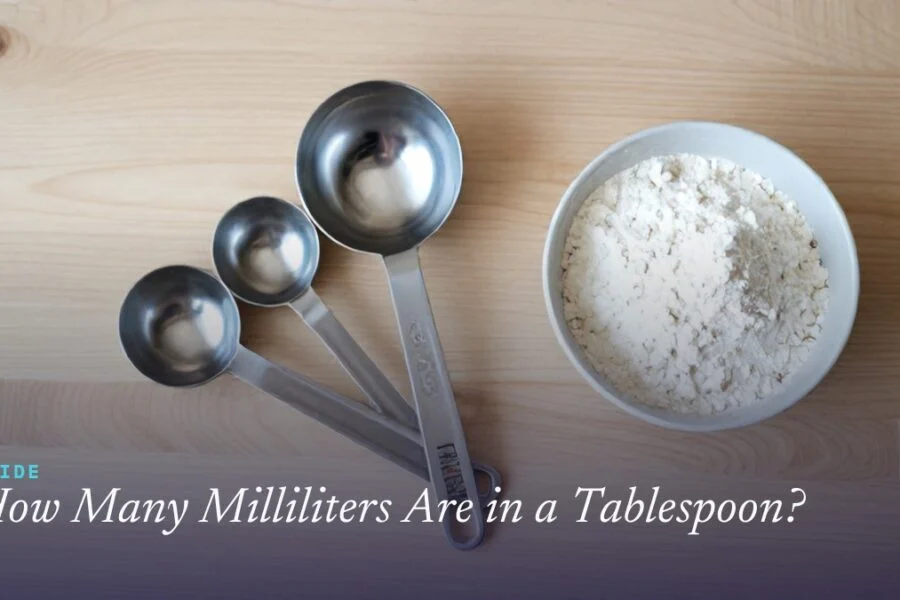
Yes, somewhat. An actual metal tablespoon from a cutlery set is a rough real-world stand-in for the standardized 14.79 mL unit. Different manufacturers’ spoons hold a bit more or less. Use a measuring spoon set calibrated to the standard volume whenever precision matters, not a spoon from your flatware drawer.
Why does the answer show up as both “14.79 mL” and “15 mL”?
Both are correct, and serve different purposes. 14.79 mL is the precise, mathematically derived figure. 15 mL is the practical, rounded figure everyone actually uses. Recipe sites, nutrition labels, and most conversion tools default to 15 mL because the extra decimal precision doesn’t change how a dish tastes. It only starts to matter somewhere like a chemistry lab, where fractional milliliters genuinely move the outcome.
Related Articles

How Big Is an Acre? Real-World Size Comparisons in Feet
An acre covers 43,560 square feet. Shaped into a perfect square, that’s about 208.7 feet on each side — a little smaller than a football field. Numbers alone…
How Long Is X Seconds? 14 Real Durations You Can Picture
Seconds are the hardest unit of time to feel intuitively. They’re too short for most people to estimate accurately without counting, and easy to lose track of once…
How Long Is 20+ Feet? Real Object Comparisons
At 20 feet and beyond, you’re out of “hand and body” territory. You’re into “building and vehicle” territory instead. This is the scale where architects, contractors, and sports…
How Tall Is 37+ Inches? Real Object Comparisons
Past three feet, “inches” starts overlapping with height — a TV screen, a doorway, a person. That’s exactly why “how tall is 63 inches in human height” shows…