How Big Is X Inches? Real Object Comparisons From 1 to 16 Inches
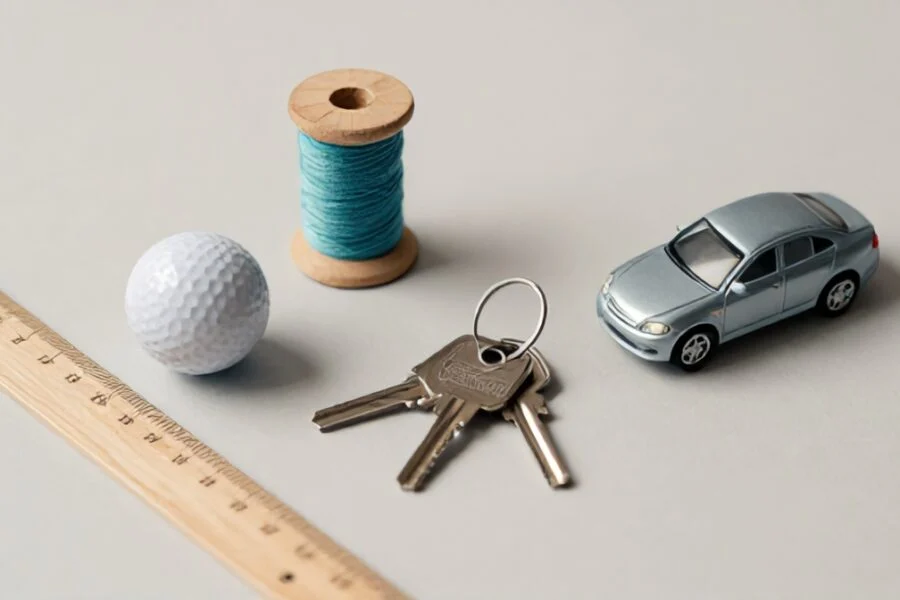
An inch equals 2.54 centimeters. That’s the exact conversion — everything else here is about picturing it.
Numbers on a ruler don’t mean much on their own. Below, every inch from 1 to 16 gets a real, verified object, so you can picture the size instantly.
You’ll also get a quick conversion chart up front and a full side-by-side comparison table at the end.
Quick Inch-to-Centimeter Conversion Chart
Here’s every whole inch from 1 to 16, converted to centimeters and feet.
| Inches | Centimeters | Feet |
|---|---|---|
| 1 | 2.54 | 0.083 |
| 2 | 5.08 | 0.167 |
| 3 | 7.62 | 0.25 |
| 4 | 10.16 | 0.333 |
| 5 | 12.7 | 0.417 |
| 6 | 15.24 | 0.5 |
| 7 | 17.78 | 0.583 |
| 8 | 20.32 | 0.667 |
| 9 | 22.86 | 0.75 |
| 10 | 25.4 | 0.833 |
| 11 | 27.94 | 0.917 |
| 12 | 30.48 | 1.0 |
| 13 | 33.02 | 1.083 |
| 14 | 35.56 | 1.167 |
| 15 | 38.1 | 1.25 |
| 16 | 40.64 | 1.333 |
1 Inch: A U.S. Quarter
A U.S. quarter measures 0.955 inches across — just shy of a full inch. Hold one flat and you’re looking at roughly 1 inch of width. It’s the most common “about an inch” reference people already carry in their pocket.
2 Inches: An AA Battery
A standard AA battery runs 1.97 inches long, or 50.5 millimeters. That rounds cleanly to 2 inches. Two stacked quarters come close to the same length, just slightly over.
3 Inches: A Hockey Puck
An NHL hockey puck measures exactly 3 inches across. The league locks that number down by rule, along with a 1-inch thickness and a 6-ounce weight. Few sports equipment specs are this precise.
4 Inches: A Softball
A regulation softball has a 12-inch circumference. Divide that by pi and the diameter works out to about 3.82 inches — close to 4. That’s noticeably bigger than a baseball, which measures around 2.9 inches across.

5 Inches: A 3×5 Index Card
A standard index card measures 3 by 5 inches. The long edge runs exactly 5 inches. Librarians standardized this size back in the 1870s for card catalogs, and it stuck.
6 Inches: A Dollar Bill
Every U.S. bill, from $1 to $100, measures 6.14 inches long. Denomination changes the printing, never the paper size. Lay two bills end to end and you’d nearly cover a foot.
7 Inches: A Vinyl Single Record
A classic 45 RPM vinyl single measures 7 inches across, center hole included. Record stores still label these “7-inch singles” today. A full album runs much larger, at 12 inches.
8 Inches: A Chef’s Knife Blade
Home cooks reach for an 8-inch blade more than any other length. It’s the standard size for a kitchen’s main chopping knife. Longer blades get harder to control on a small cutting board.
9 Inches: A Pie Pan
A standard American pie pan measures 9 inches across. Most classic pie recipes assume this exact size. Deep-dish pans run slightly bigger, closer to 9.5 inches.

10 Inches: A Dinner Plate
Most modern dinner plates measure 10 to 10.5 inches across. That’s roomier than the older 9-inch “luncheon plate” standard restaurants once used. Portion sizes grew over the decades, and plates grew to match.
11 Inches: A Sheet of Letter Paper
Standard U.S. letter paper measures 8.5 by 11 inches. The long edge runs exactly 11 inches. It’s the size loaded into nearly every office printer in the country.
12 Inches: A Foot-Long Ruler
Twelve inches equals exactly 1 foot, no rounding needed. A standard classroom ruler is built to this length. It’s the most reliable mental yardstick for “about a foot.”
13 Inches: A 13-Inch Laptop
A 13-inch laptop’s screen measures 13.3 inches diagonally, corner to corner. That’s the class size for compact laptops like the MacBook Pro 13. It fits easily into bags built for daily commuting.
14 Inches: A Large Pizza
A large pizza at most U.S. chains measures 14 inches across. That typically yields six to eight slices, depending on the cut. Extra-large pies usually jump to 16 or 18 inches.
15 Inches: A 15-Inch Laptop
Full-size laptops in the “15-inch” class measure 15.6 inches diagonally. Gamers and editors often prefer the extra screen space over a 13-inch model. The trade-off is weight — these laptops run noticeably heavier.
16 Inches: A Chicago-Style Softball
Chicago’s famous 16-inch softball measures exactly 16 inches around, and players catch it bare-handed. That’s close to a third bigger than a standard 12-inch softball. The extra size is the whole point — it slows the game down.
Why Object-Based Sizing Works Better Than Numbers Alone
A number on its own doesn’t stick in memory. “7 inches” means little until you connect it to a 7-inch vinyl single you’ve actually held.
That’s why designers, teachers, and product listings lean on real comparisons. Once a size is anchored to something familiar, it’s easy to recall later without a ruler.
This works both ways too. If you already know a dollar bill is 6.14 inches long, you can eyeball almost anything nearby against it and get a solid estimate.
How Precise Are These Comparisons?
Every object above uses its real, published dimension — not a rounded guess. A hockey puck really is 3.00 inches, set by NHL rule.
Some, like the softball and dinner plate, land close to the target inch rather than dead-on. Those get called out with a tilde (~) so the approximation is clear.
That distinction matters. A tool page might round for convenience, but a size-reference guide should show you the real number and let you see how close it lands.
Where the Modern Inch Comes From
The inch wasn’t always fixed at 2.54 centimeters. Old English versions varied slightly by region and by ruler — sometimes literally, by which king was measuring.
The U.S. and U.K. agreed on today’s exact definition in 1959. Since then, 1 inch has meant precisely 2.54 centimeters, with no rounding involved.
That agreement is why a ruler bought in London and one bought in Chicago measure identically. Before 1959, that wasn’t guaranteed.
Quick Ways to Estimate Inches Without a Ruler
You won’t always have a ruler handy. A few everyday items work as reliable backup measurements.
A credit card’s short edge measures 2.125 inches — call it 2 inches for quick math. Fold a dollar bill in half and you get about 3 inches, since the full bill runs 6.14 inches long.
Your thumb offers a rough backup too. Tip to first knuckle, most adult thumbs run close to 1 inch. It’s not exact, but it’s useful in a pinch.
Common Mistakes People Make Estimating Inches
The biggest one: assuming similar-looking objects are close in size. A hockey puck and a golf ball look alike in photos, but a puck spans 3 inches and a golf ball only 1.68 inches — nearly double the real difference.
Another mix-up: confusing a 13-inch laptop with a 15-inch one. That’s only 2.3 inches of extra diagonal screen, yet it changes the entire footprint and weight of the machine.
People also round inches too aggressively. Calling a 9-inch pie pan “basically 10 inches” throws off recipe math — a 10-inch pan has roughly 23% more surface area for crust to cover.
Full Comparison Table: 1 to 16 Inches at a Glance
| Inches | Centimeters | Real-World Object |
|---|---|---|
| 1 | 2.54 | U.S. quarter (0.955 in) |
| 2 | 5.08 | AA battery (1.97 in) |
| 3 | 7.62 | NHL hockey puck (3.00 in) |
| 4 | 10.16 | Softball diameter (~3.82 in) |
| 5 | 12.7 | 3×5 index card, long edge |
| 6 | 15.24 | Dollar bill length (6.14 in) |
| 7 | 17.78 | 7-inch vinyl single |
| 8 | 20.32 | Chef’s knife blade |
| 9 | 22.86 | Standard pie pan |
| 10 | 25.4 | Dinner plate (~10.5 in) |
| 11 | 27.94 | Letter paper, long edge |
| 12 | 30.48 | 12-inch ruler (1 foot) |
| 13 | 33.02 | 13-inch laptop screen (13.3 in) |
| 14 | 35.56 | Large pizza diameter |
| 15 | 38.1 | 15-inch laptop screen (15.6 in) |
| 16 | 40.64 | 16-inch Chicago softball |
Frequently Asked Questions
How long is 6 inches of hair?
Six inches of hair usually falls between shoulder length and mid-back, depending on where you measure from. Hair grows about half an inch a month, so 6 inches means roughly a year of steady growth.
How long is 8 inches of hair?
Eight inches typically reaches mid-back to bra-strap length. At the average growth rate, that’s close to 16 months of growth from a fresh cut.
How long is 4 inches of hair on a man?
On most men, 4 inches lands somewhere between ear length and collar length, depending on texture. That works out to roughly eight months of growth.
How tall is 12 inches?
Twelve inches stands exactly 1 foot tall — the same length as a standard ruler stood on its end.
How tall is 4 inches?
Four inches stands about as tall as a softball is wide. It’s a third of a foot, give or take.
What does 6 inches look like visually?
Six inches is the length of a U.S. dollar bill, corner to corner. Picture three AA batteries laid end to end — that reaches almost the exact same span.
What does 2 inches look like visually?
Two inches is the length of a AA battery, or the width of two stacked quarters. It’s also close to the short edge of a credit card, at 2.125 inches.
Is 8 inches bigger than a sheet of paper?
Not by much. A sheet of letter paper is 8.5 inches wide, just half an inch more than 8 inches. Its length, 11 inches, is the bigger jump.
How long is 7.5 inches?
Seven and a half inches sits between a 7-inch vinyl single and an 8-inch chef’s knife blade. Picture the record with an extra half inch tacked onto the edge.
How long is 3.5 inches?
Three and a half inches falls between a hockey puck and a softball’s diameter. It’s also the long edge of a standard playing card, which measures 3.5 by 2.5 inches.
How long is 10 inches of hair?
Ten inches of hair usually reaches somewhere around the waist, depending on torso length. At half an inch of monthly growth, that represents about 20 months without a trim.
How many inches is a foot?
A foot always equals 12 inches. That conversion never changes, unlike centimeters, which round differently depending on how many decimal places you keep.
How big is 9 inches visually?
Nine inches matches a standard pie pan laid flat. That’s about one and a half dollar bills placed end to end, since each bill runs 6.14 inches long.
How long is 10 inches of hair on a man?
Ten inches on a man’s hair is uncommon outside longer styles, but it usually reaches mid-chest. Most men keep hair well under this length, so it stands out visually.
Related Articles
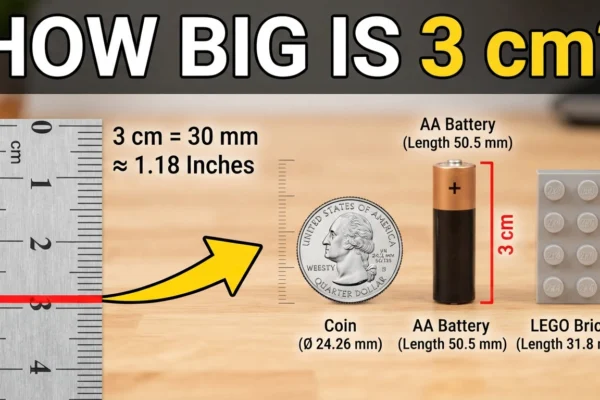
How Big Is 3 cm? Size in Inches, mm, and Real Objects
3 centimeters is 1.18 inches — a hair under 1 3/16 inches on a ruler, and exactly 30 millimeters. To picture it without measuring anything: it’s about the…
10 Everyday Things That Are 24 Inches Long
24 inches equals 2 feet, 60.96 centimeters, 609.6 millimeters, or 0.6096 meters. It is roughly the diagonal size of a small computer monitor, or the height of a…
8 Everyday Things That Are 36 Inches (One Yard)
36 inches equals exactly 3 feet (1 yard), 91.44 centimeters, 914.4 millimeters, or 0.9144 meters. It is the length of a standard yardstick and the standard height of…
9 Everyday Things That Are 60 Inches Tall (5 Feet)
When you think about things that are around 60 inches tall, several common items come to mind. This height is often found in furniture and household items. Here’s…